01 Capture
Frame the whole room first
Start with the full space, then add the window edge, bedside zone, darkest corner, or other area that best shows what feels wrong.
Focused room check
Use this focused page when the main problem is a room that feels underlit, gloomy, or shadowy.
Priority reads
When to use this check
Understand why a room feels too dark and what to improve first.
Bring
One full room view plus the area that feels most revealing.
Readout
Mood, daylight, layering, comfort, and practical next moves.
Dark-room signal
The room feels dim even before night, with corners, wall edges, or furniture zones losing definition faster than they should.
What this mode looks for
This route keeps the premium room-scene feel while isolating the specific things that make a space feel murky rather than just insufficiently bright.
Dark-room signal
The room feels dim even before night, with corners, wall edges, or furniture zones losing definition faster than they should.
Route
Dark room mode
Mood
Low-light diagnosis
Scene cue
Daylight falloff
Next move
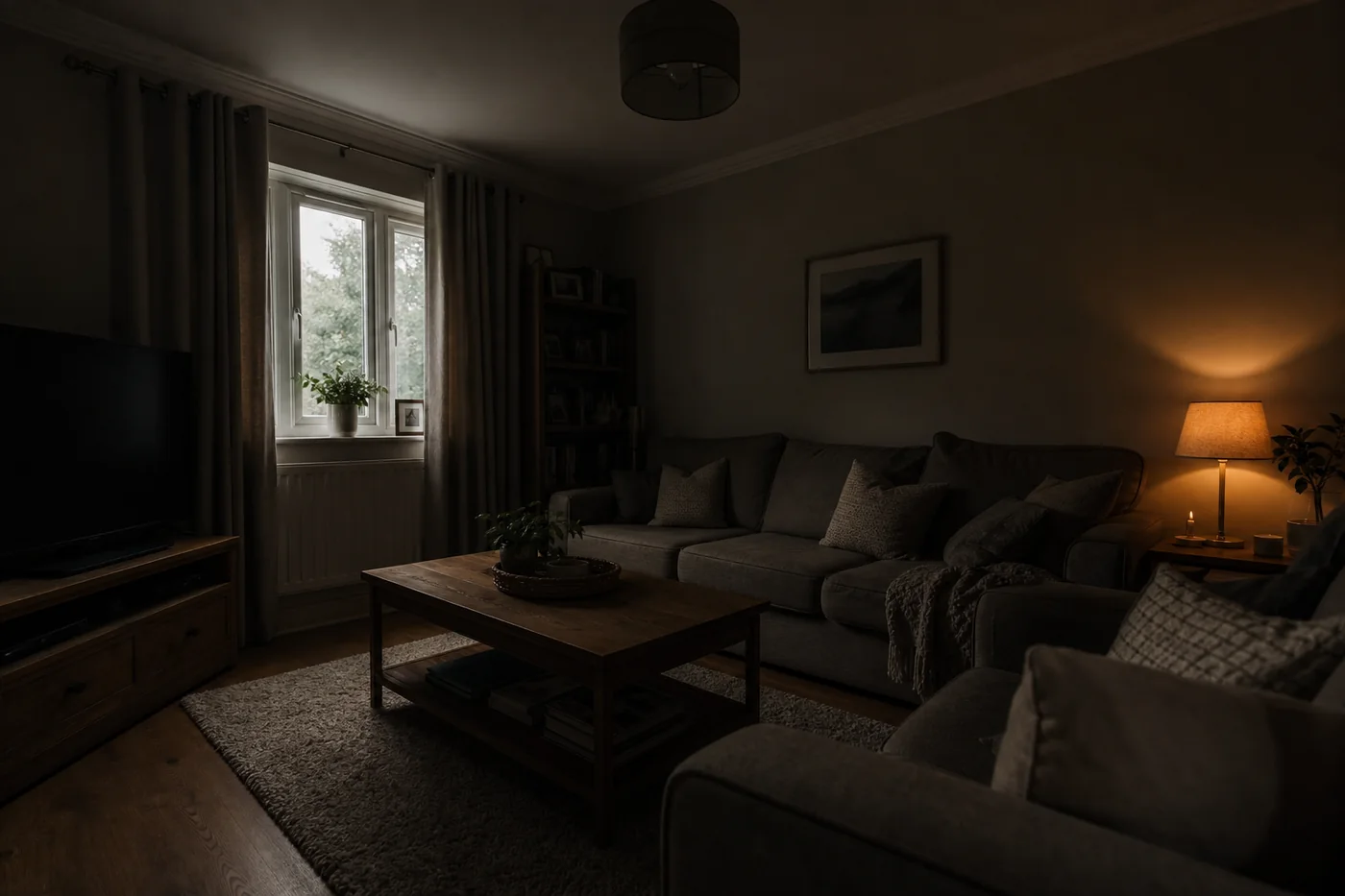
This scene keeps the moody, premium direction while showing enough floor, furniture, and falloff to explain why the room reads dark.
How this route works
This route keeps the premium room-scene feel while isolating the specific things that make a space feel murky rather than just insufficiently bright.
01
Daylight falloff
02
Heavy corners
03
Layering gap
Start with the full space, then add the window edge, bedside zone, darkest corner, or other area that best shows what feels wrong.
Common causes include poor daylight reach, one weak central fitting, and no lower-level task lighting.
Use this check as a quick first pass, then open the full audit for scores, findings, confidence levels, and ranked next steps together.
What this mode isolates first
Weak daylight reach
Common causes include poor daylight reach, one weak central fitting, and no lower-level task lighting.
Heavy corners
The full audit checks dark corners, window usefulness, and whether the room layout is making lighting feel worse.
Layering gap
Upload a full room shot plus the darkest area for the strongest diagnosis.
What this image shows
This scene keeps the moody, premium direction while showing enough floor, furniture, and falloff to explain why the room reads dark.
Route
Dark room mode
Mood
Low-light diagnosis
Next move
Full audit next
Move into the full audit
Bring
One full room view plus the area that feels most revealing.
Readout
Mood, daylight, layering, comfort, and practical next moves.
Dark-room signal
The room feels dim even before night, with corners, wall edges, or furniture zones losing definition faster than they should.
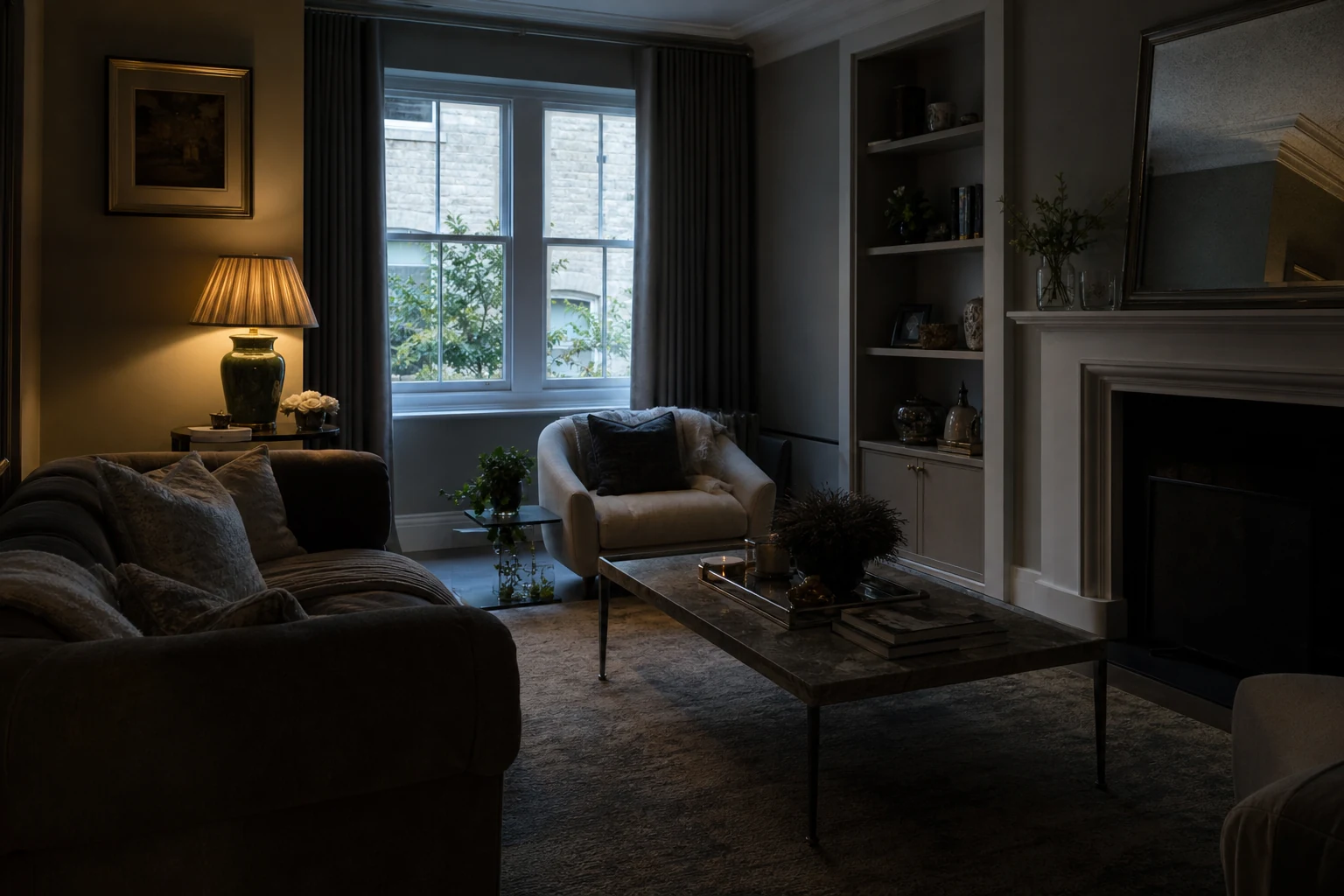
What the full audit adds
Mini results preview
Score-led diagnosis with ranked fixes
Audit snapshot
84
Room score
Balanced base, with glare and lamp spacing still capping comfort.
Daylight balance
84Healthy base light, but the brightest edge still pulls too hard near the window.
Lamp layering
72One more low warm source would make the room feel composed instead of merely lit.
Glare control
66The weakest category, and the first fix the audit would push to the top of the list.
Ranked next steps
The full audit turns the diagnosis into an ordered action stack.
Soften the brightest sightline first
Add a lower ambient lamp layer
Tighten bulb warmth and spread
Choose the right route
Each check stays focused on one room problem, then hands over to the full audit if you need a broader read.
Best pattern
Start with the room feeling you can already name. Move to the full audit when you need the full scored readout.
Full room audit
RouteBest when the room feeling is not obvious yet and you want the complete score-led readout first.
Dark room check
CurrentFor rooms that feel murky, shadow-heavy, or underlit before evening even starts.
Bedroom comfort
RouteFor bedrooms that feel too bright, too cold, or too restless once the lamps take over.
Damp overlap
RouteFor colder edges, stale corners, and visible moisture clues that overlap with comfort complaints.
Lighting planner
RouteFor rooms that function today but still feel flat, improvised, or too dependent on one fitting.
Trust surfaces
These pages explain what Rightlight6 can infer from room imagery, how confidence changes, and why the audit stays focused instead of drifting into generic home-improvement advice.